


As I said last year: better late than never. What follows is a collection of the things I published and produced in 2025. It was another busy year, taking me from Santa Fe to Berlin to Arizona and plenty of other places besides. I also recently submitted the manuscript for my next book, but more on that at the end…


1— ‘Time’s Bookends’, for Aeon Magazine
17 February 2025
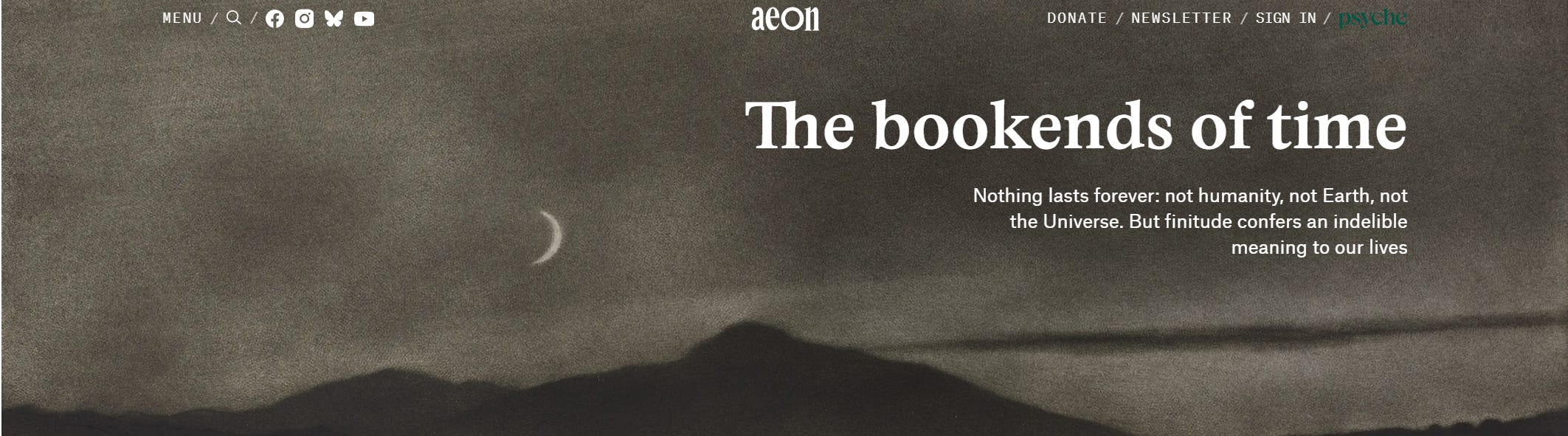
Edited by the brilliant Richard Fisher, this one was a labor of love. The essay is, in many ways, a summary of the primary things I’ve been thinking about since X-Risk. It’s a summary of some ideas I’ve been thinking through for a while now.
As young children, we all come to terms with our own mortality somewhere between ages of six and ten. We might call this the First Death. But, as Jonathan Schell argued, the species itself now confronts its own extinction: which he called the Second Death. But, as we have progressively pinpointed our placement within cosmic time, we have discovered and grappled with the fact there are even greater deaths: that of the biosphere and, beyond, even of the universe itself. So, a Third and Fourth Death, too; there are ever greater mortalities, expanding concentrically outward.
But, in coming to terms with these mortalites, we have also had to expand the arena of space and time wherein we acknowledge that actions and decisions can be meaningful because their consequences cannot be taken back. Before acknowledging said mortalities it wasn’t clear that consequences can stick, and be irreversible, at scales beyond the tangible and familiar. Reckoning with these realities, we have had to acknowledge that we live in a thoroughly historical universe where contingency has bite.
If — from Copernicus onward — discovering where we are in space made us feel unremarkable, pinpointing where we find ourselves in time stands set to dramatically reverse this. One intellectual revolution, undone by another.
2—‘Asteroid Anxiety’, for Big Think
7 March 2025
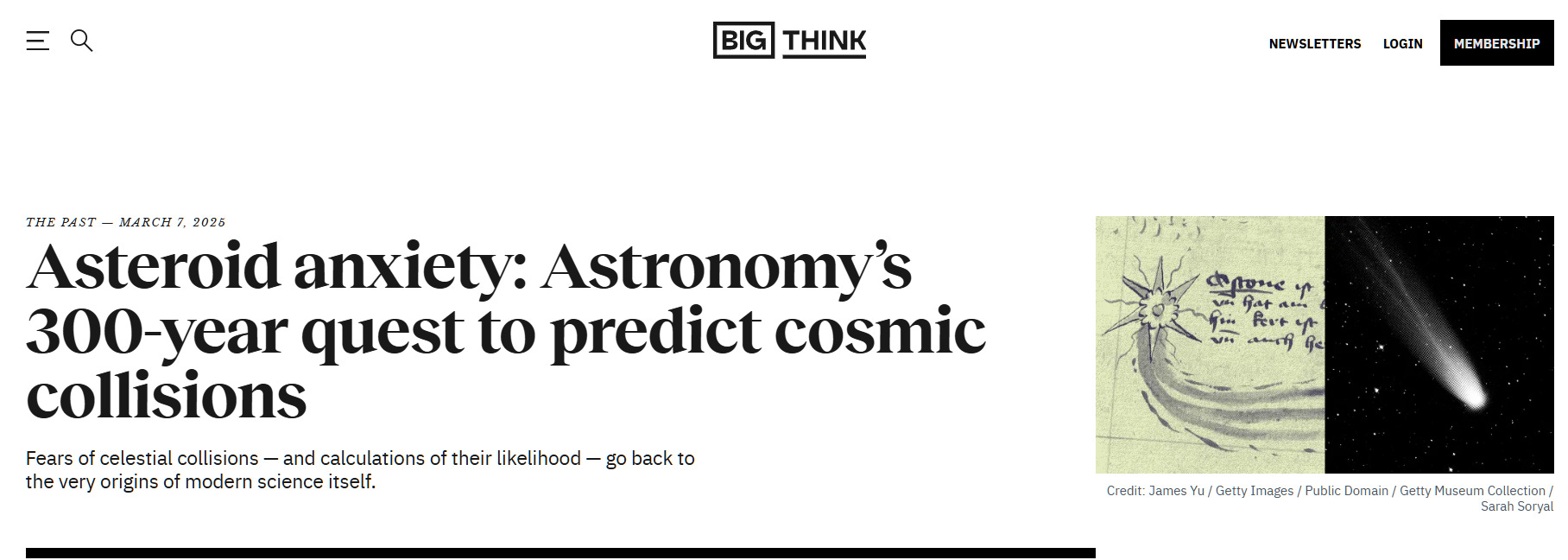
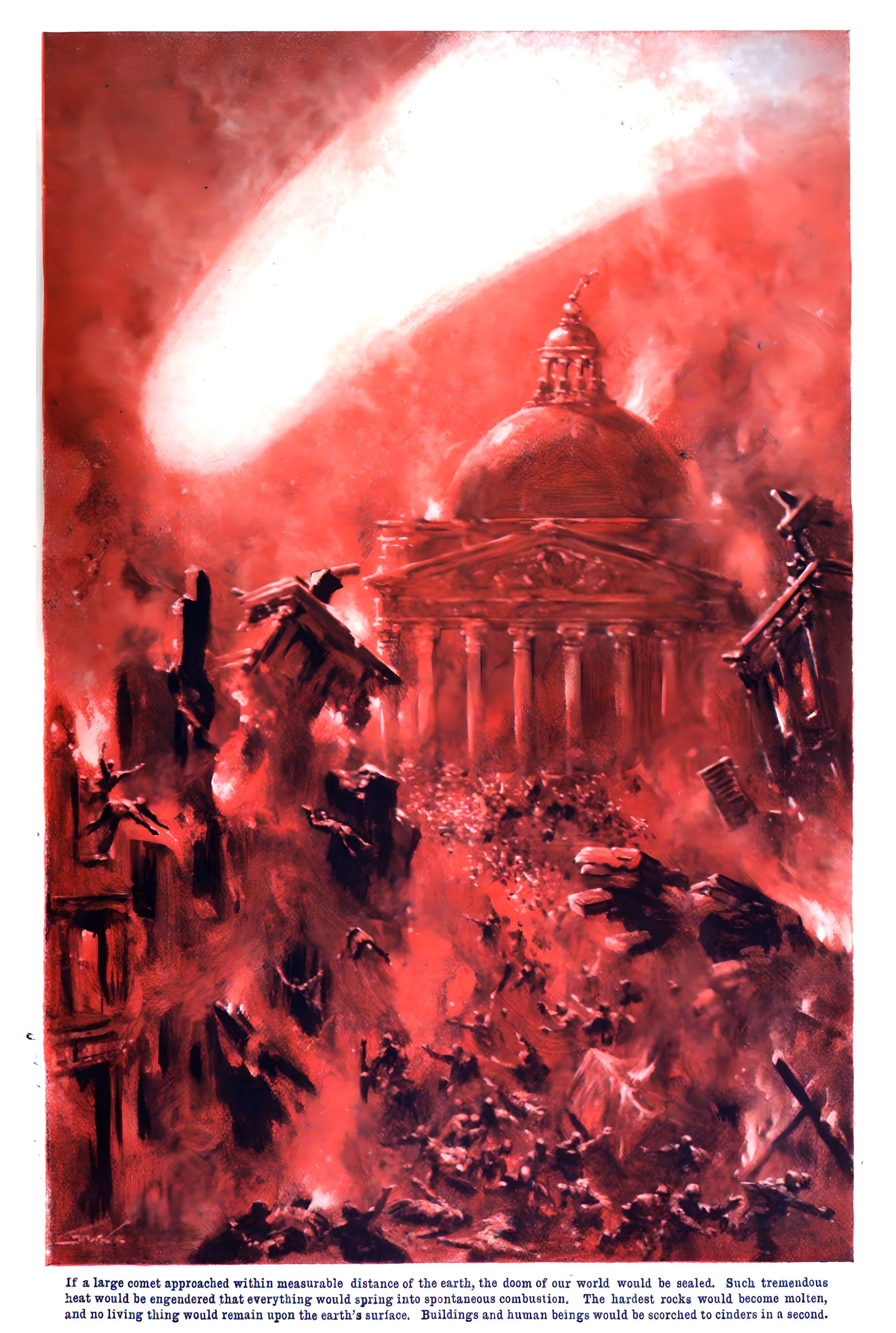
Early last year, asteroid #2024YR4 provoked fear of cosmic collision. But astronomy's quest to forecast such hazards goes back to the very origin of science. In fact, such efforts provided early vindication of the promise of the scientific method itself.
Over three centuries ago, during a time when many thought scientific research to be an ineffectual and trifling pursuit, early breakthroughs in predicting comet paths began turning the tide.
The story of one of modern science’s earliest triumphs, this article relates how fears of comet-induced extinction provoked early attempts to predict the cosmic hazards jeopardizing our planet.
3—‘Aliens Everywhere’, for Big Think
30 April 2025
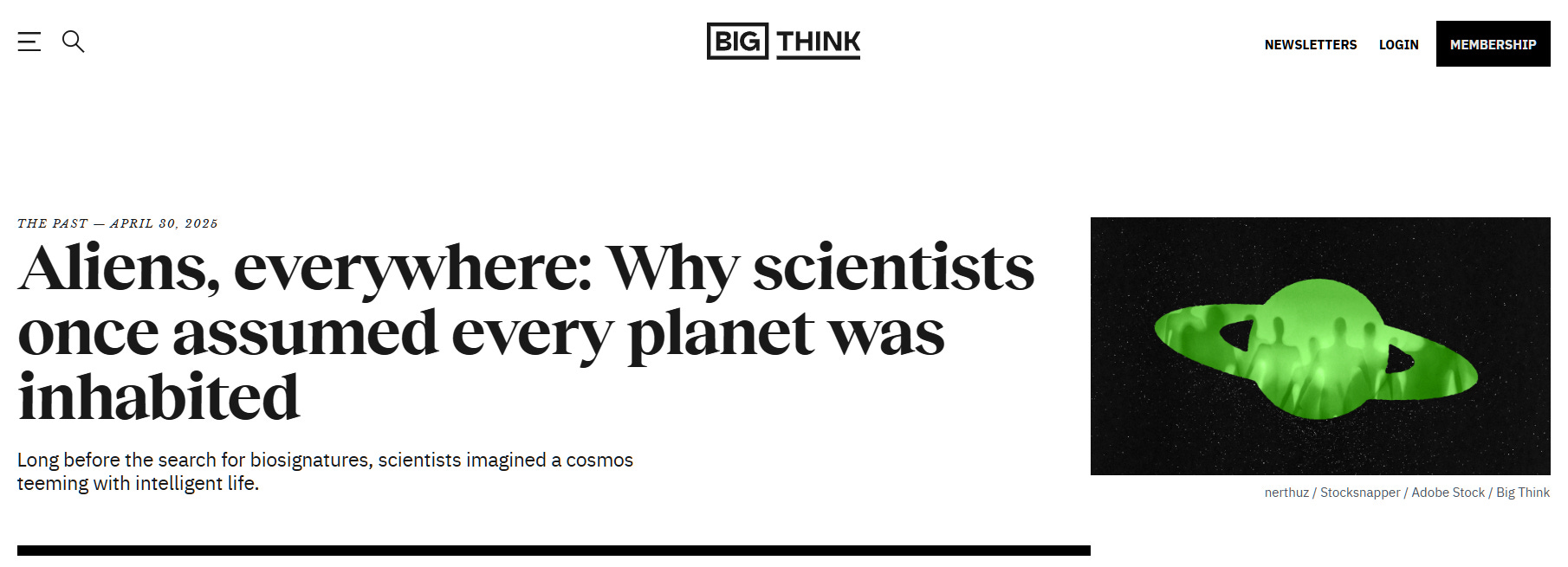
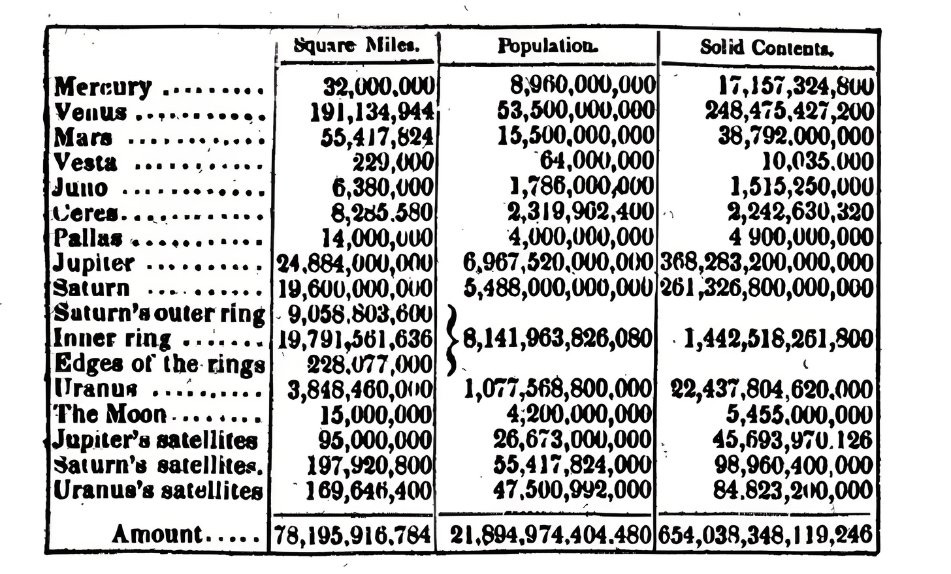
For centuries, scientists assumed the universe was not full — but brimful — of life. Many naturalists claimed even the surfaces of suns were inhabited, whilst others conducted cosmic censuses: guessing total population numbers for the universe, calculating this to be in the "quadrillions".
In this article, I inspect why people used to assume every last planet was occupied by reasoning beings, and w
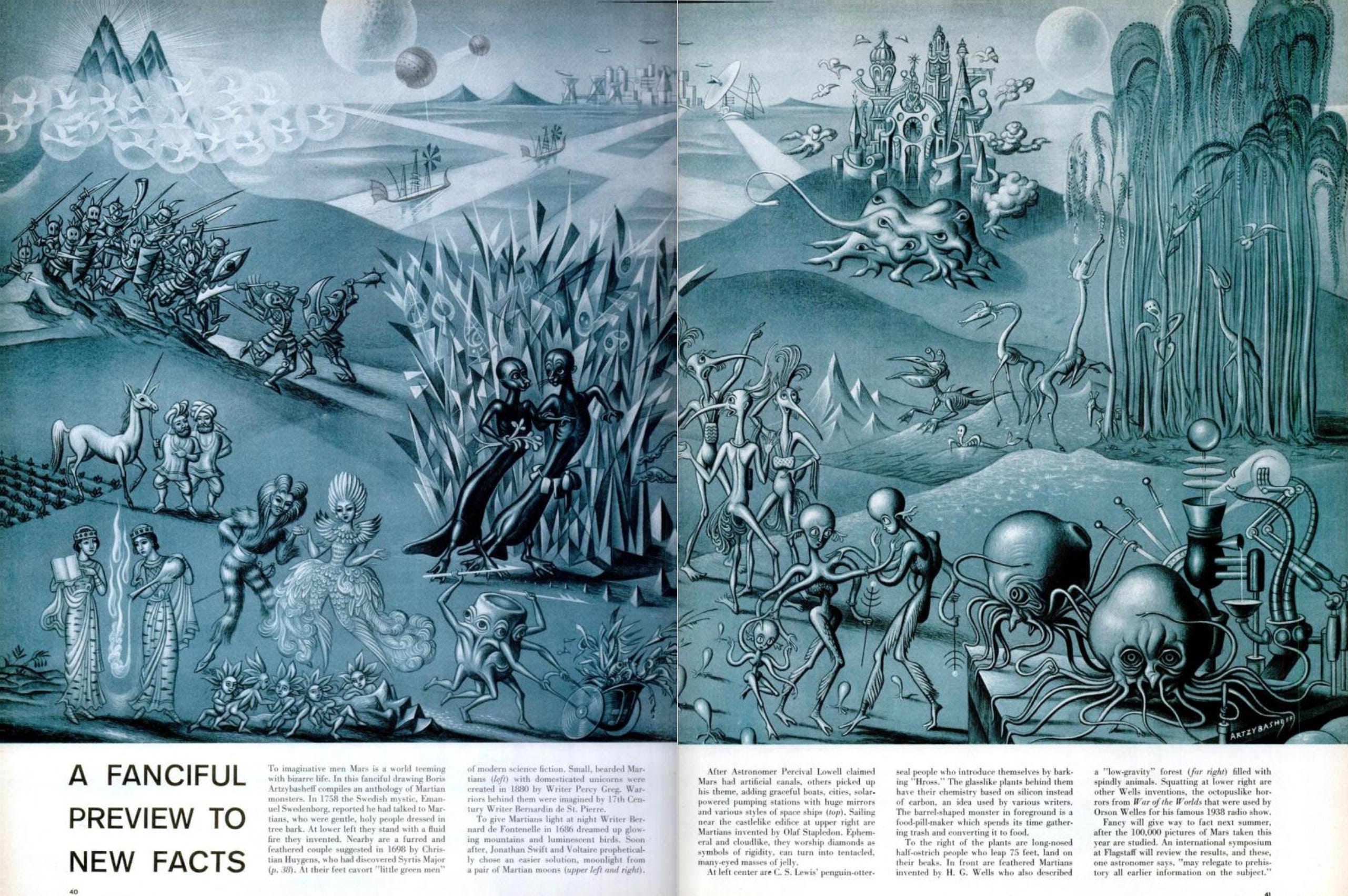
In the article, I explore Thomas Dick’s mid-1800s attempts at conducting a ‘population census’ for the Solar System (by extrapolating from contemporary population density of England across all circumstellar surfaces… including Saturn’s Ring). Here are his results:
4—‘The History of Now’, for Antikythera Journal
10 May 2025
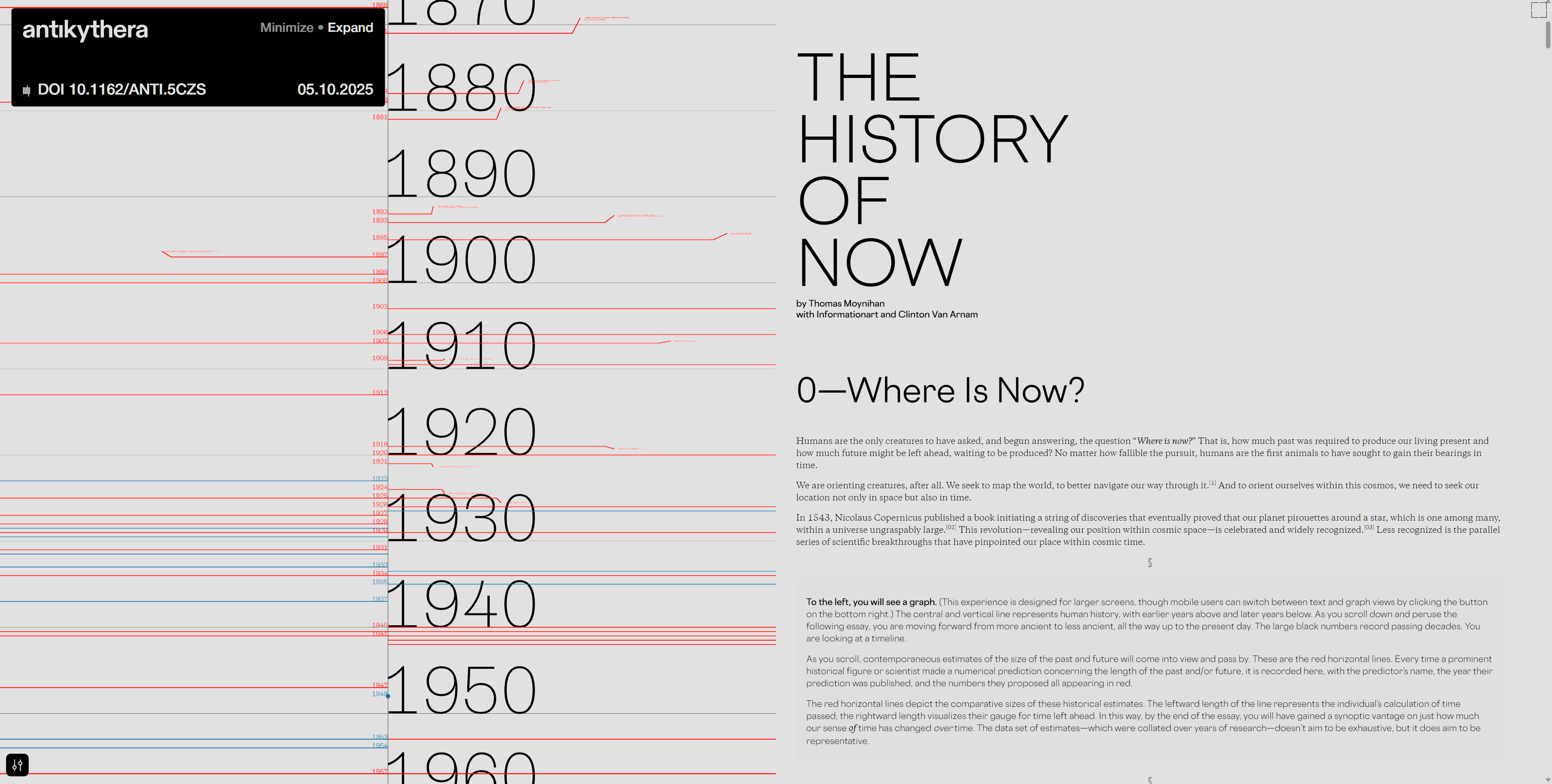
This one was another labour of love: a unique opportunity to collaborate with information architect and data visualizer Lisa Strausfeld (of InformationArt) and Clinton Van Arnam to produce an interactive essay and accompanying timeline.
The timeline attempts to visualize how answers to the question ‘where is now?’ have changed over time: illustrating how humankind’s sense of the time behind and time ahead has changed over history, as we have learned and discovered more about chronology and the placement of the present within it. Over the years, every time I’ve come across a quantitative estimate on the size of the future or past, I’ve recorded it — this project was an attempt to visualize that dataset and make it interactive.
In the timeline on the left-side of the screen, the central and vertical line represents human history, with earlier years above and later years below. As you scroll down and peruse the accompanying essay on the right-side of the screen, you are moving forward from more ancient to less ancient, all the way up to the present day.
Whilst scrolling, contemporaneous estimates of the size of the past and future come into view and pass by on the timeline. These are the red horizontal lines. Every time a prominent historical figure or scientist made a numerical prediction concerning the length of the past and/or future, it is recorded here, with the predictor’s name, the year their prediction was published, and the numbers they proposed all appearing in red.
The red horizontal lines depict the comparative sizes of these historical estimates. The leftward length of the line represents the individual’s calculation of time passed; the rightward length visualizes their gauge for time left ahead. In this way, by the end of the essay, you will have gained a synoptic vantage on just how much our sense of time has changed over time.
A unique opportunity to work with two incredibly talented designers, I am very proud of the result! We also included a ‘free roam’ option, accessible via the settings widget in the bottom left, so feel free to explore the data with that.
Read ‘History of Now’ @ Antikythera Journal here.
5—‘The Media & Morphospace of History’, for Farsight Magazine
13 May 2025
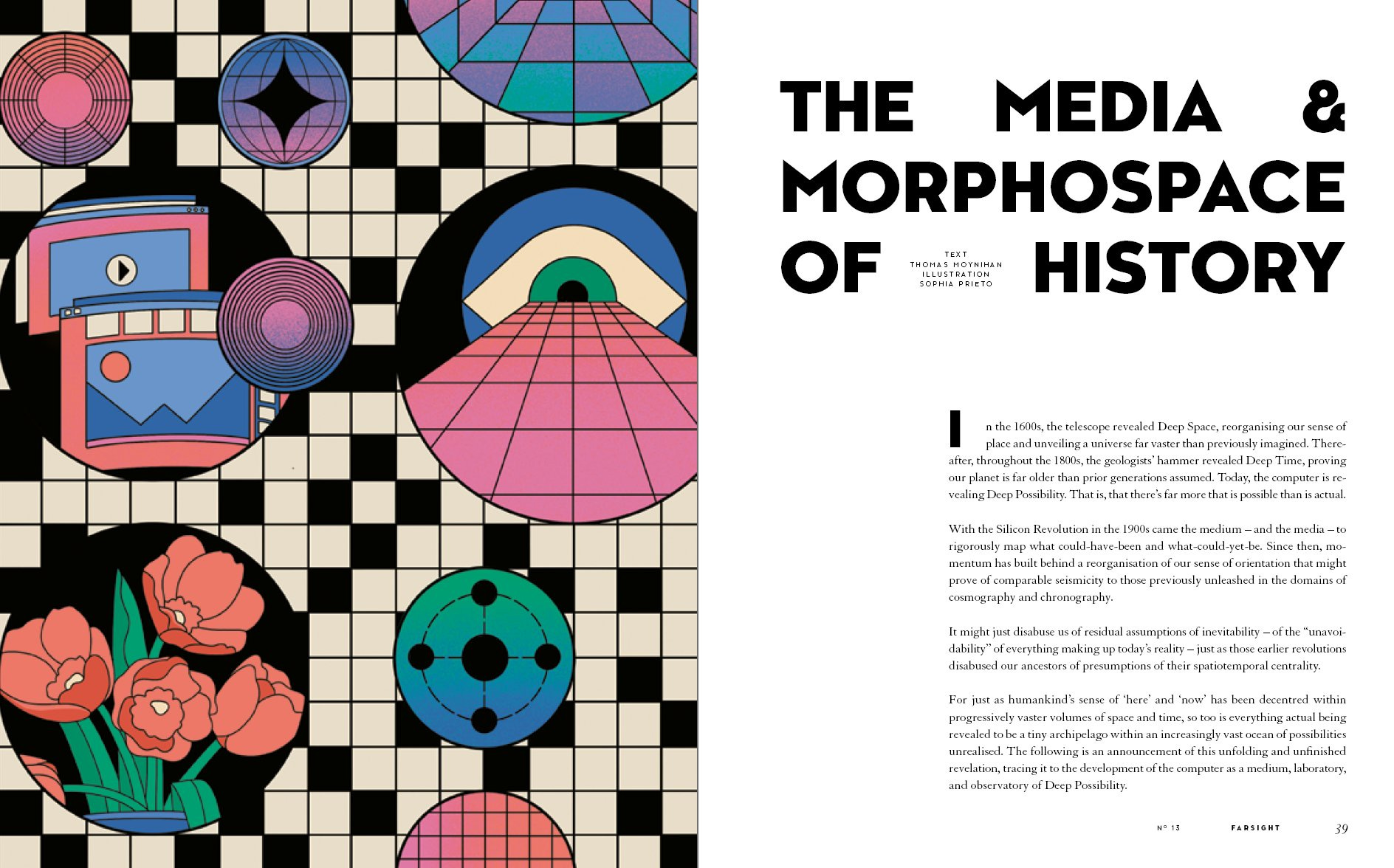
This essay traces, in broad outlines, how humanity’s sense of what’s possible has radically expanded throughout the past — largely thanks to the development of electronic computers. It borrows the idea of a ‘morphospace’ from evolutionary theory (a conceptual or graphical map representing all possible or existing organic structures) and applies this to human history itself.
I return again to the idea of ‘Deep Possibility’: the sense that there’s far more possible than can ever be actual, and how it is this that makes history matter, insofar as it means not every outcome will come to pass regardless.
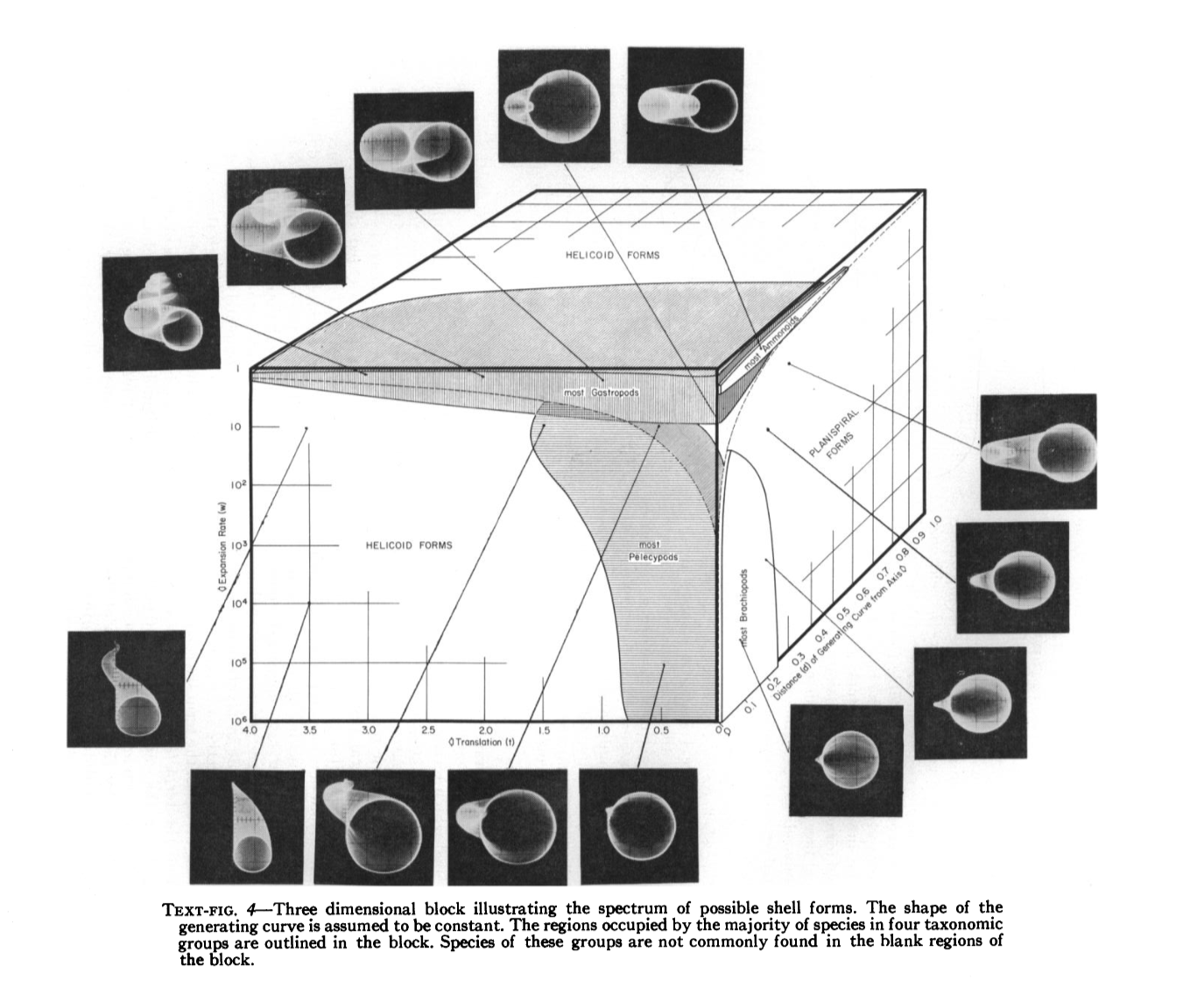
Featuring characters ranging from Pascal to Leibniz to Edward Lorenz, I am rather fond of this particular essay.
6—‘A Bildungsroman for the Baby Noosphere’, keynote @ ICI Berlin
15 May 2025
I was invited by the brilliant Magdalena Krysztoforska, Ben Woodard, and others to give a talk at the ICI Berlin. Other keynotes included Mike Levin and Deborah Coen. It was great fun. I talked about the idea of planetary intelligence, and whether such a notion makes any sense.
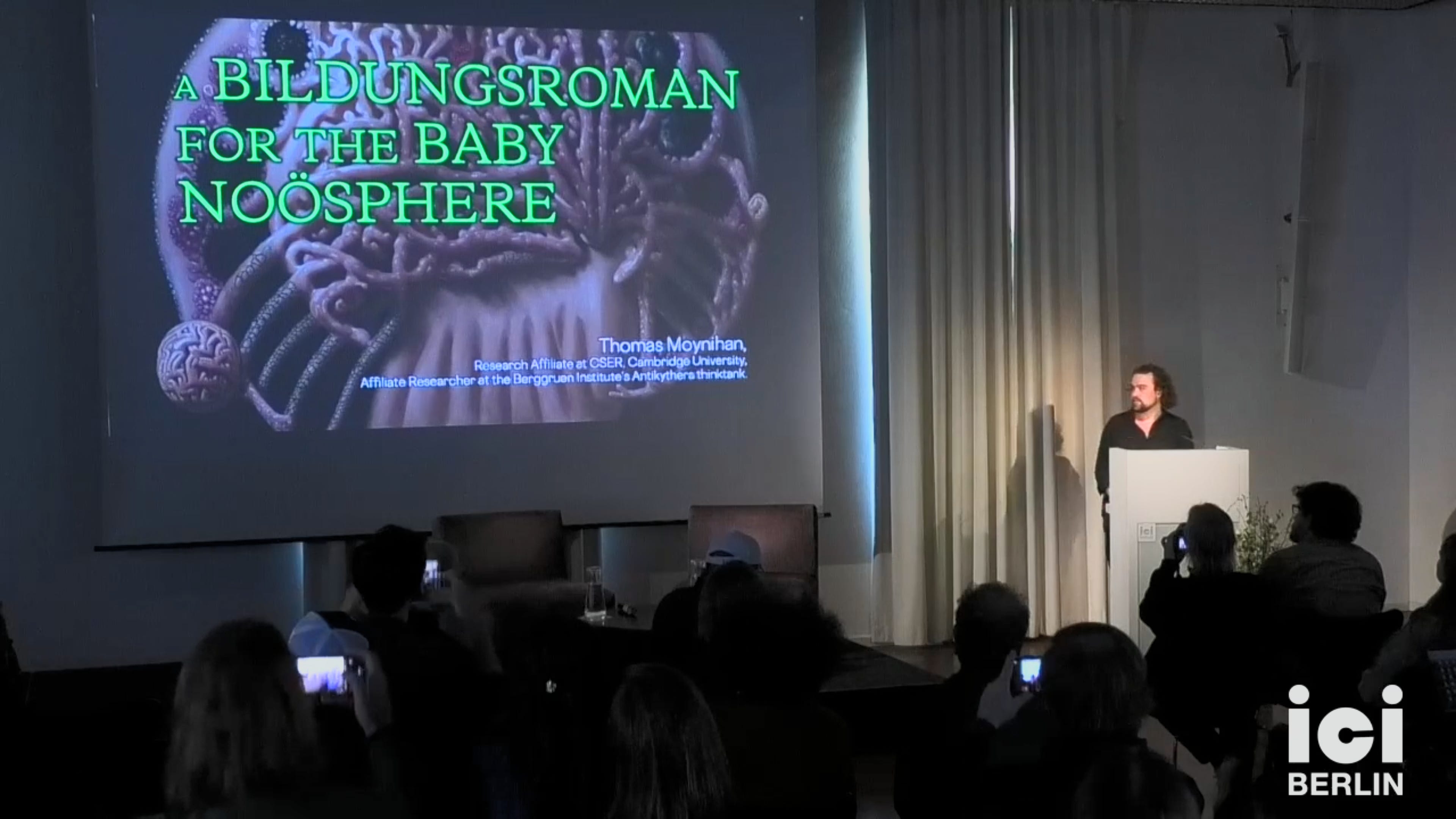
Here’s the blurb for my talk, which was titled ‘A Bildungsroman for the Baby Noosphere’:
For centuries, people — both misanthropes and humanists alike — have compared Earth’s life to a ‘sludge’ clinging to our planet’s crust. Stephen Hawking memorably called the human race ‘chemical scum’ clinging cravenly to a spinning rock. Is biology merely a mold or planetary fungal infection? Answering this question depends on the evaluation of the stature of sludge. After all, some slime has potentials. The Earth’s organic coating, after all, has — for aeons now — drastically transformed its planetary environment, bringing forth the unprecedented from the precedented. So far, however, this process would be best called planetary stupidity, rather than planetary sapience. However, how could it have been otherwise? No one is born wise: this is a status that can only ever be earned, and this takes time and tribulation. So, too, with any baby intelligence, no matter the scale. Folly is part of growing up. This talk, thus, asks the question: can our planet’s infant noosphere, spawned from upstart chemical slurry, ever leave its infancy?
Listen to a recording of the talk here @ ICI Berlin here.
7—‘The Strange History of De-Extinction’, for Big Think
20 May 2025
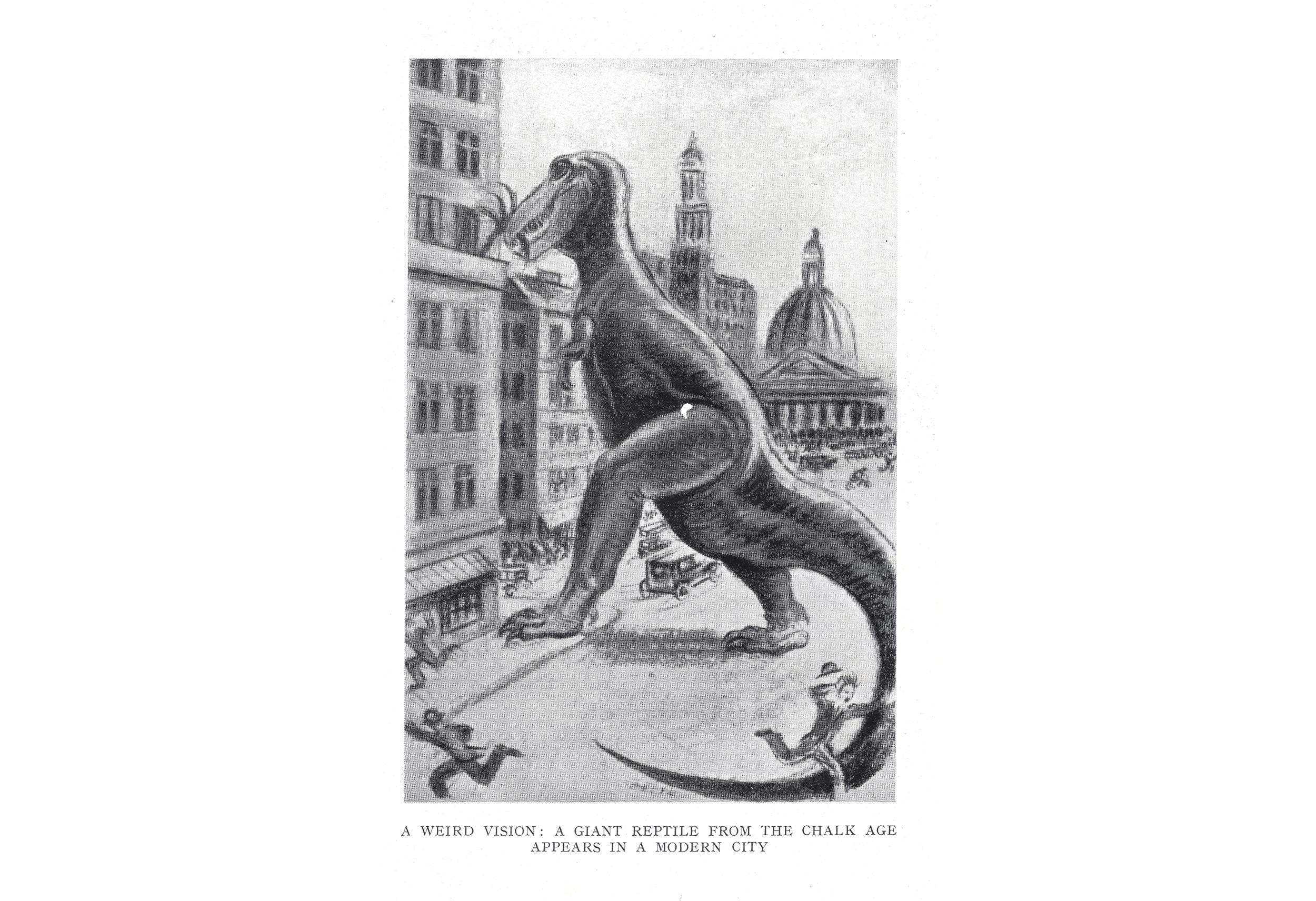
The concept of species extinction is only a couple of centuries old. But as soon as scientists began accepting that species could die out, they also began speculating on ways we could resurrect them. From dinosaurs to aurochs, early visions of de-extinction blurred science, myth, and mourning: and they did so long before Michael Crichton or Colossal Biosciences.
In this article, I attempt to tell the broad outlines of that story, leading up to present attempts to bring back the dead.
8—‘Life as Slime’, for Asimov Press
9 June 2025
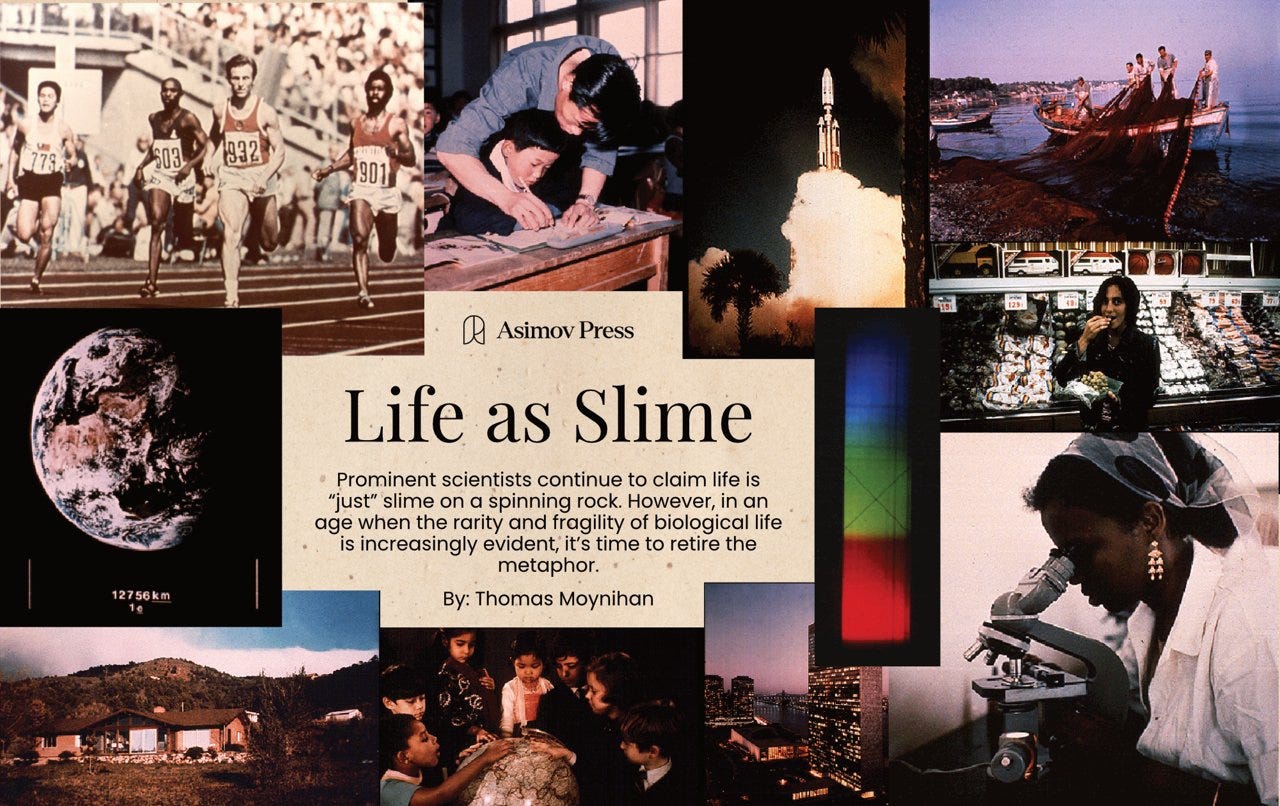
You’ll be familiar with the favorite clever quip of pessimistic philosophers and hard-nosed cosmologists alike. 'Life is just slime atop a spinning rock, circling a mundane star, in a cosmos unimaginably large.’
Something about the emotion going into such statements has never quite sat right with me. The ‘just’ is doing a lot of work. What else did you expect? In this essay, I trace the history and development of such statements, before arguing that they are clearly a hangover from elder, religious worldviews that did put us in the role of cosmic protagonist and did flatter us with cosmic nobility and dignity.
After all, you can only feel demoted if part of you still believes you deserved your old position. You can only feel cheated from an inheritance if part of you, deep down, still thinks you were owed it.
It’s time to retire the ‘just’ in such statements. Long live the slime!
I’ve always admired what Asimov Press does, so it was a joy to write something for them. I may post the original version of this essay here on Substack soon, as it was compressed a lot in editing.
8—Interview with Benjamin Bratton for Berggruen Institute’s Futurology Podcast
29 July 2025
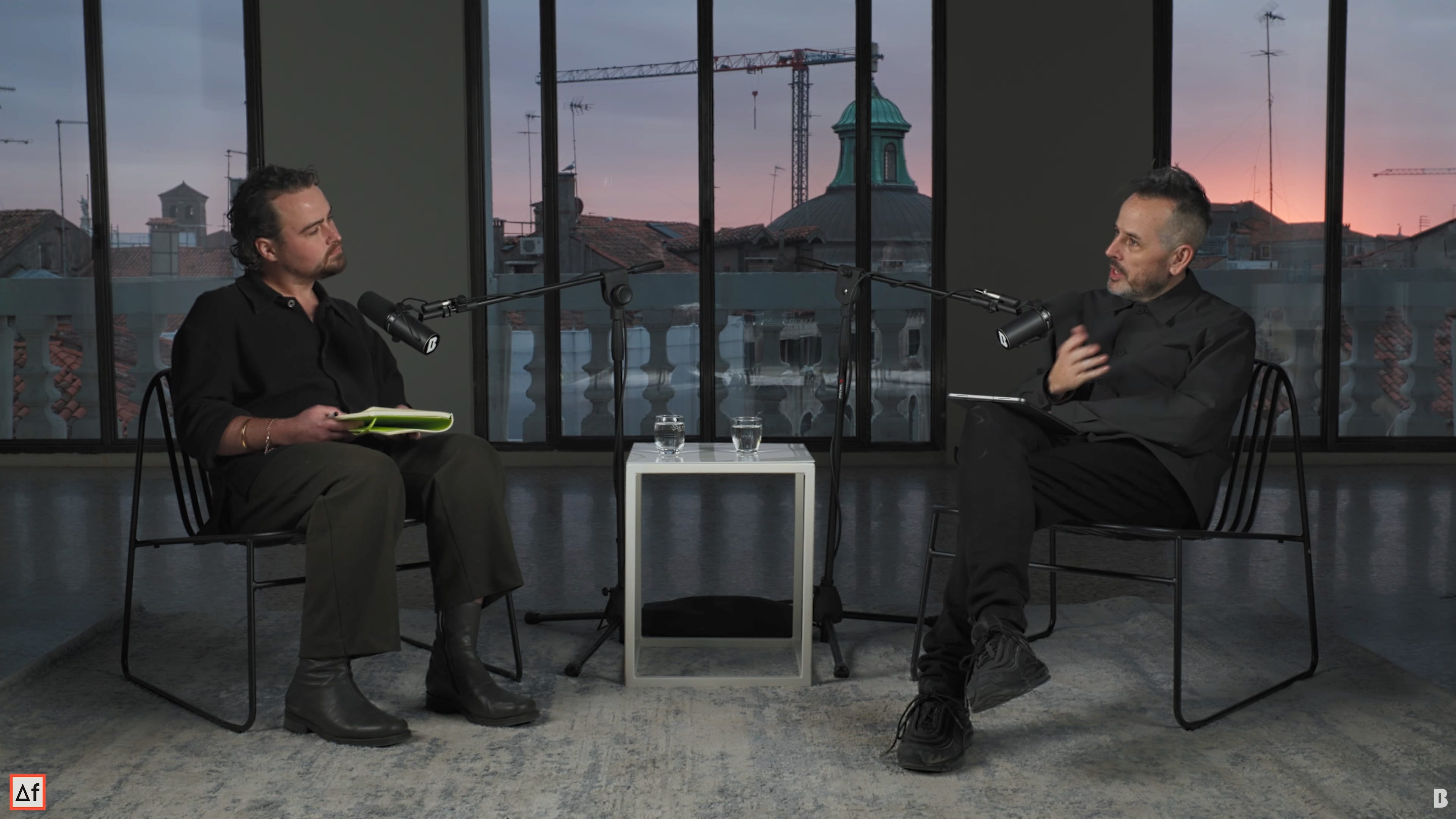
I had the pleasure of recording a podcast interview with Benjamin Bratton, in the Palazzo Diedo’s upper floors, looking out over the spires of Venice. It was for the Berggruen Institute’s new ‘Futurology’ podcast; it was a genuine honour to be featured.
9—‘In Defense of Secular Religions’, for Combinations Magazine
30 July 2025
Something of an extension to an article I wrote for Noema a few years ago, on the question of residues of religion in contemporary AI discourse, this article explores the question of what it even is to be a ‘secular religion’.
Many things, these days, are accused of being secular religions: including, perhaps most notably, the entire edifice of modernity itself. Often, this is meant as an insult: an attempt to debunk and delegitimize. The gambit being: if you can reveal an unavowed inheritance of religiosity in avowedly atheist or secular discourses, you have shown that they are not being fully transparent or honest with themselves.
In this essay, I explore what that means and, whilst accepting that, yes, modernity is an offshoot of medieval theology, this doesn’t thereby delegitimize modernity or its precepts. Again, borrowing from evolutionary theory, I argue that modernity, science, and modern ethics (i.e. utilitarianism and deontology) are ‘exaptations’ of medieval theology, where an ‘exaptation’ describes a fortuitous shift where an organ evolved for one function (or none at all) is later co-opted for a new one. The essay opens with one of my favorite concepts: that of ‘cosmic emotion’, or, the feeling of ethical urgency we are sometimes struck with when considering the universe at large.
Read @ Combinations Magazine here.
10—‘The Philosophers Who Predicted “Ultimate” Forms of Consciousnesss’, for Big Think
20 August 2025
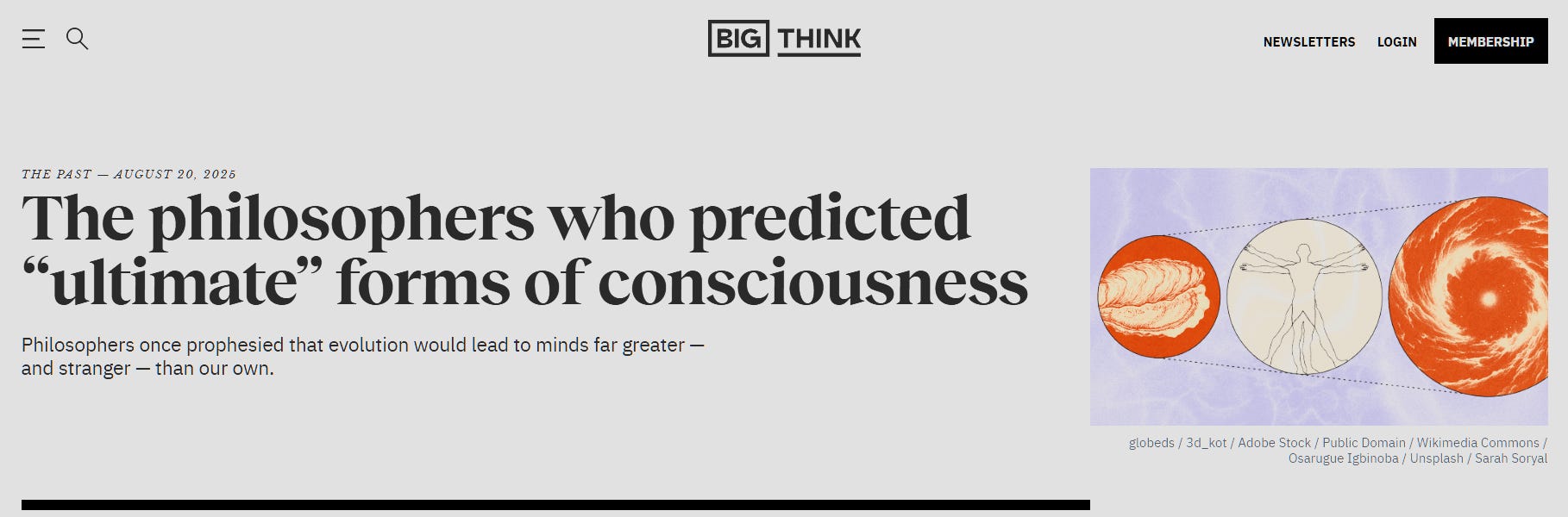
For Big Think’s special issue on consciousness, I wrote an essay on the history of suggestions that, as there minimal forms of consciousness, so too must there be ‘maximal’ ones. Or, ultimate states of mind, intelligence, and cogitation. People have being thinking, in more or less secular terms, about omnipotent and omniscient minds for a long time: long, long before current discussions of ‘superintelligence’ and so forth. In this essay, I trace the development of these types of ideas, whilst relating them to very early, embryonic fears that — through our machines — we may be creating more potent forms of intelligence that may outcompete us.
I open the essay with the humble oyster. Philosophers have often conscripted the oyster, in symbolic terms, as some supposed ‘minimal degree’ of consciousness or insight. From Plato onward, they have dismissed the oyster as living the most unreflective life an organism can live. But will there, one day, be types of minds that make us look like oysters in comparison?
11—‘Yellow-Bellied Pages’, for Tank Magazine
Autumn 2025
For the Autumn edition of Tank Magazine, the editors asked writers, artists, and filmmakers which books terrified them the most. It is a really great prompt. My response was as follows:
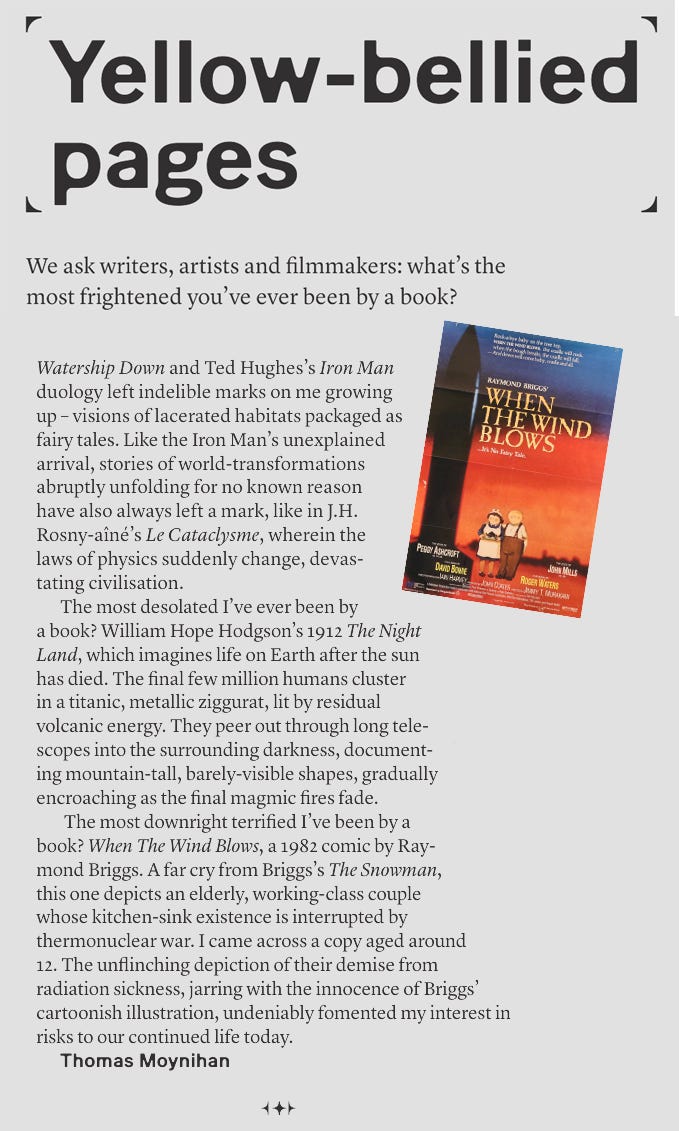
I love working with Tank: I should have a conversation with the brilliant Pete Wolfendale coming out in a future issue. Watch this space!
11—‘Why Scientists Fear “Mirror Life”’, for Big Think
15 September 2025
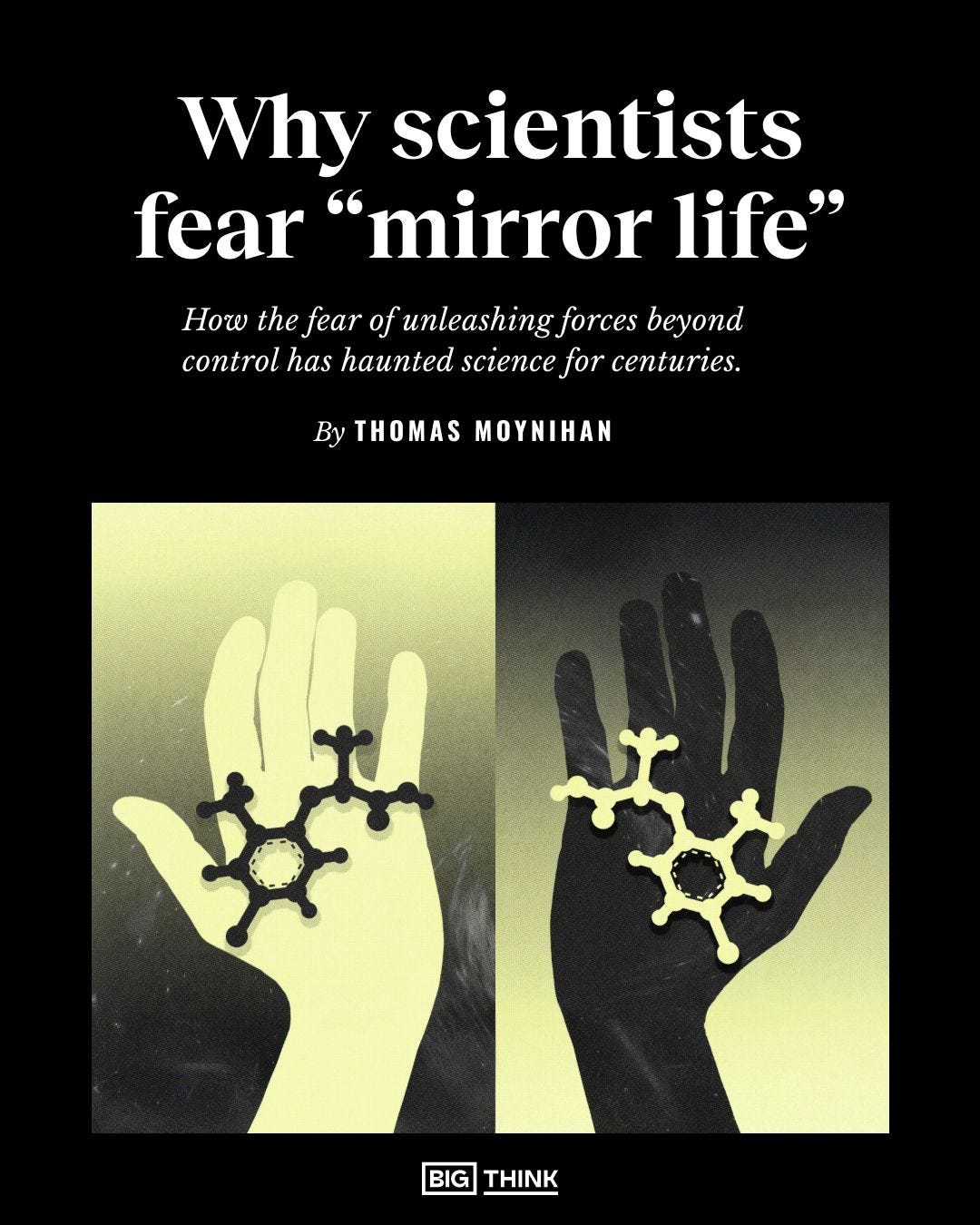
When, in late 2024, Science published a paper on potential risks from ‘mirror life’, I was captivated. Mirror life refers to the possibility of engineering lifeforms whose molecules have reverse chirality: i.e. flipped in structure, as if in a mirror. The Science paper raised the alarm on the potentially disastrous consequences of creating mirror microorganisms. They might be able to ‘infect’ our cells and go mostly undetected by immune systems, potentially causing an unprecedentedly damaging pandemic.
Upon reading the paper, I immediately asked myself whether anyone had said anything similar before. It turned out none other than Louis Pasteur — the first scientist to realise that all living cells have chirality or handedness — was the first to speculate on the possibility of creating mirror life all the way back in 1860.

This inspired me to write this article: touching on very early fears surrounding synthetic biology and thereafter opening up into the wider history of worries that science is on the brink of discovering or producing new, exotic forms of matter or life which, spreading rapidly, might end our world.
12—‘The Limitless Future’, podcast for Copenhagen Institute for Future Studies
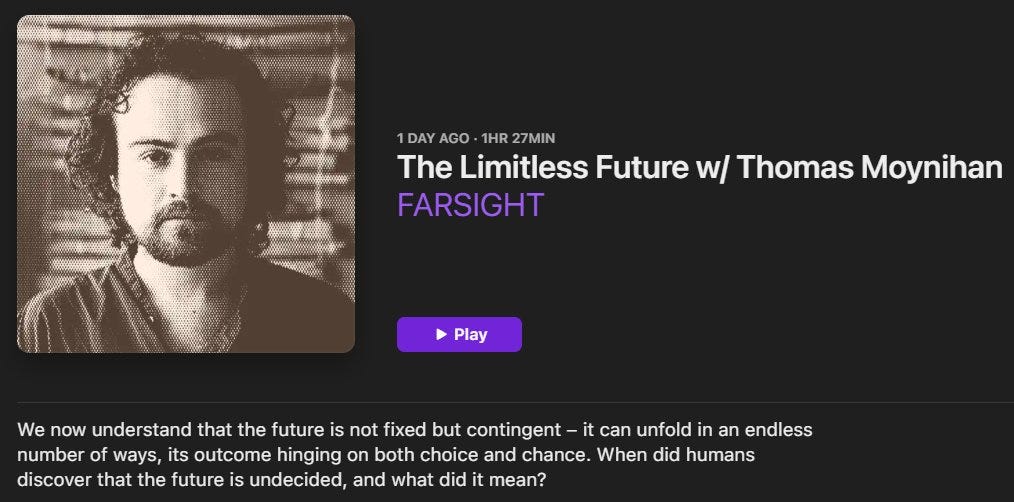
Rounding out the year, I spoke to Casper and August for the Copenhagen Institute of Future Studies’s Farsight podcast. It was a fantastic conversation: we spoke about everything from doomsday to dolphins…
Spotify here. Apple Podcasts here.
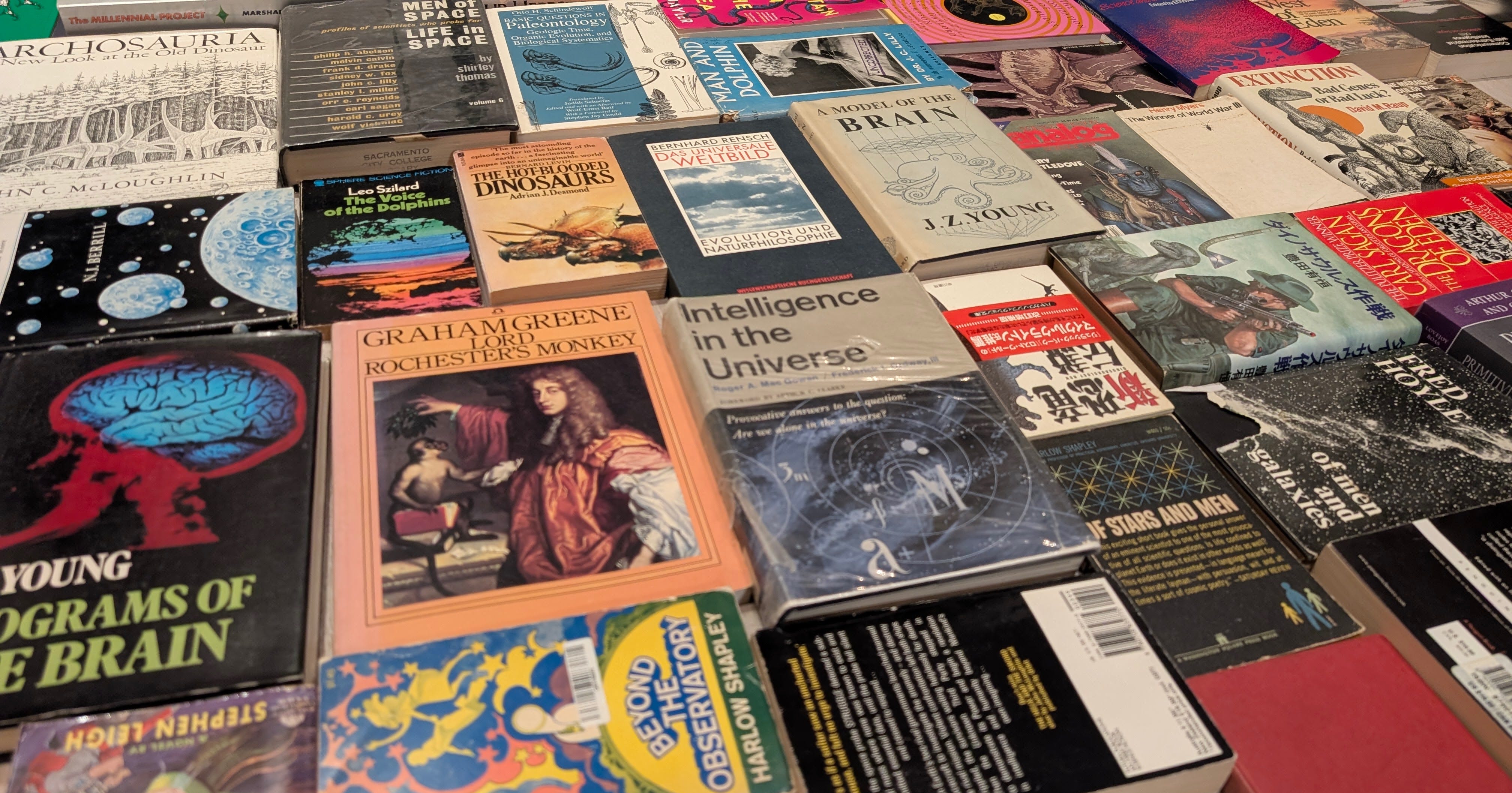
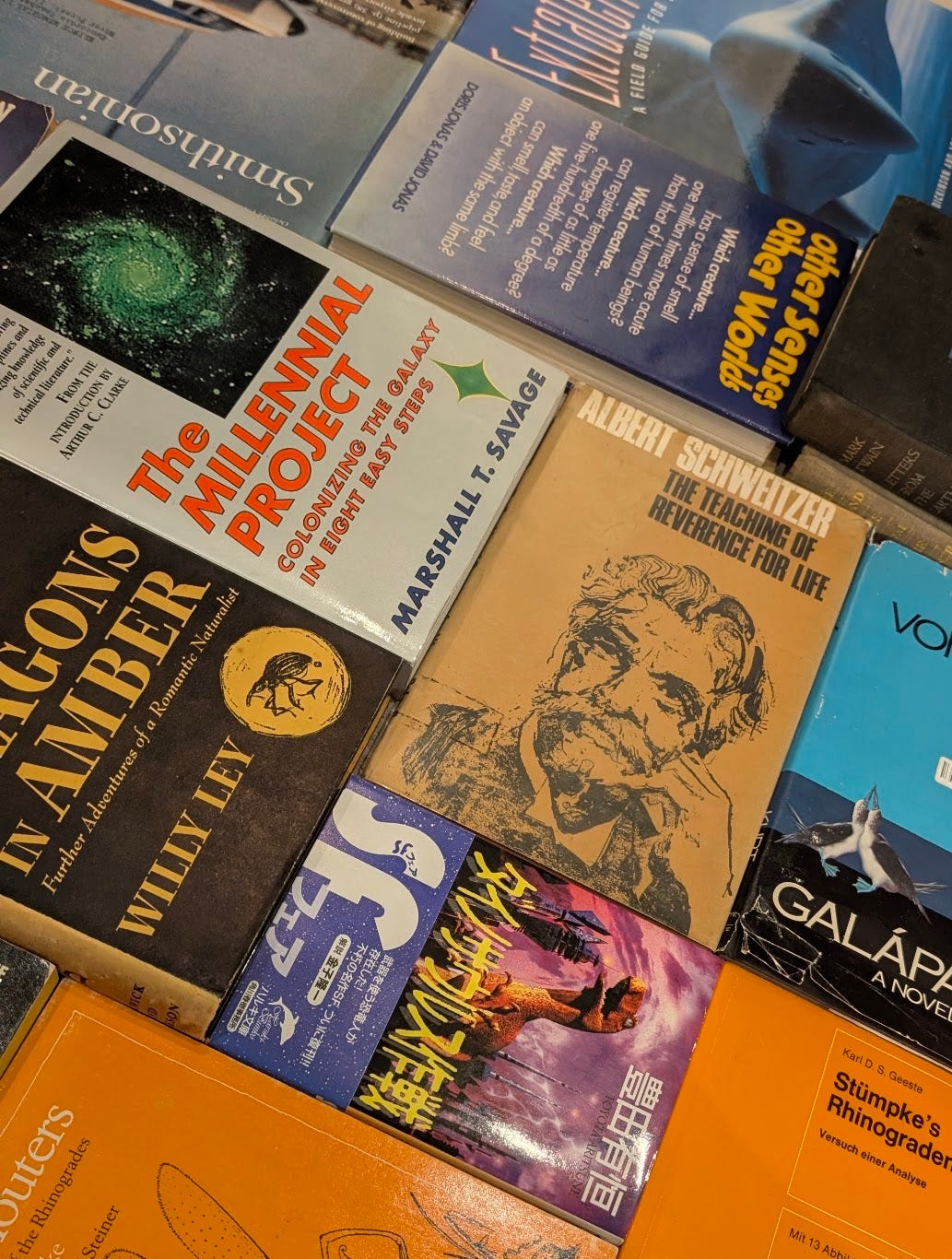
Talking of dolphins, I submitted the manuscript for my next book as 2025 shaded into 2026. I’m quite excited about it… It’s under contract with MIT Press. More on what it’s actually about soon (hint: the subtitle is likely going to be ‘Nonhuman Intelligence & Human Extinction’), but here’s a sample of some of the myriad piles of books I used as source material:
More soon and thanks so much for reading if you made it this far!